

手入れteire · care
A good knife is not bought.
It is kept.
Six small habits keep a Mihama blade sharp for decades. None of them takes more than a minute.
Wash by hand, right away
Warm water, a soft sponge, a little soap. Never the dishwasher: the heat and detergent dull the edge and crack the wood. Rinse after acidic foods such as citrus and tomato.
Dry before you put it down
Wipe the blade from spine to edge with a cloth and return it to the stand. A dry blade in open air will not spot or stain; a wet one left in a block will.
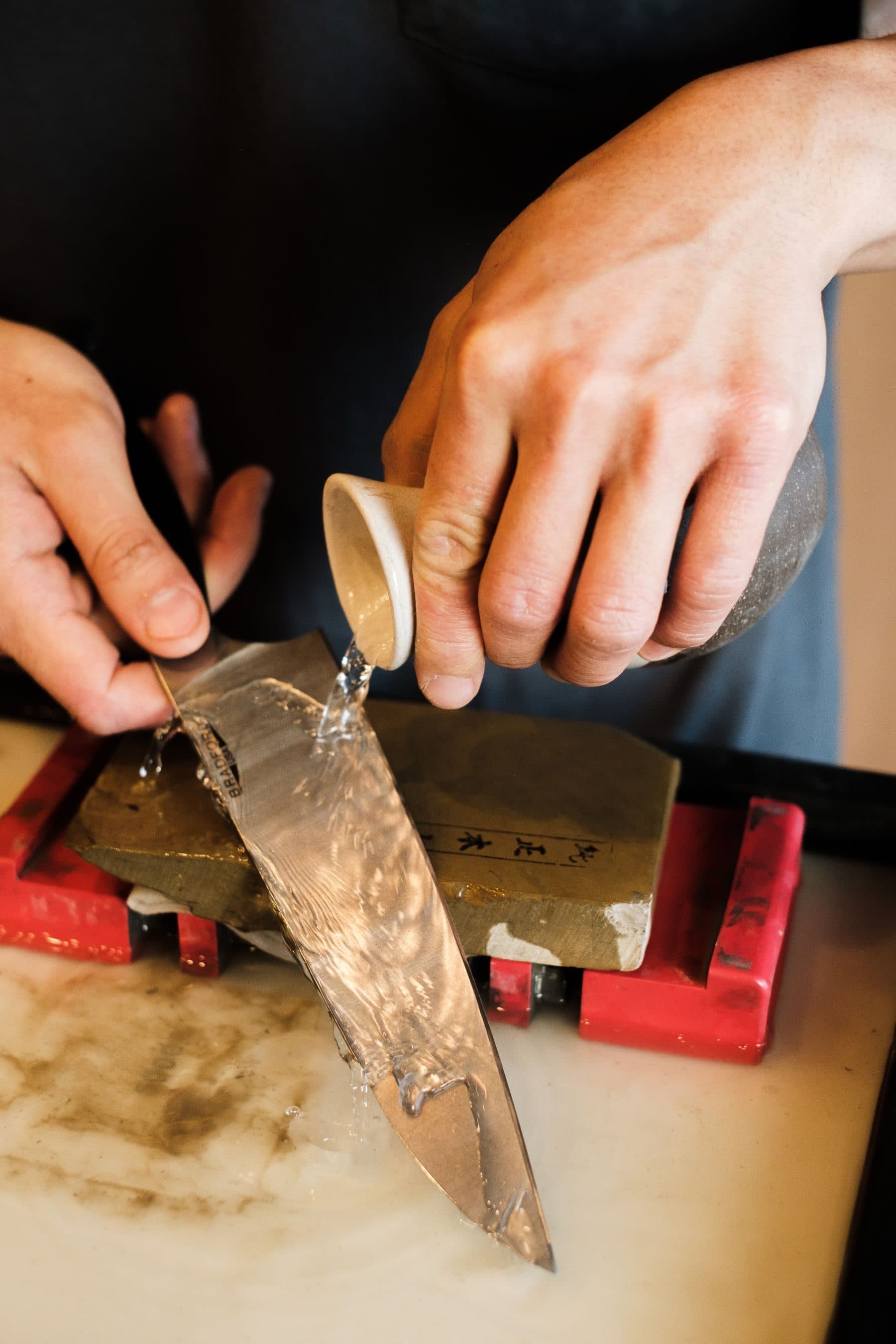
Sharpen on a whetstone
Every few months, or when a tomato skin resists, ten strokes a side on a 1000-grit stone at 10° brings the edge back. Skip the pull-through sharpeners; they grind away the Damascus layers.
Cut on wood or plastic
Glass, stone and ceramic boards blunt any edge in a week. Use an end-grain wood board and let the weight of the knife do the work.
Not for bones or frozen food
A 10° edge is fine, not brutal. Bones, frozen meat and hard squash rinds can chip it. Keep a cleaver for those, and the Nami set for everything else.
Store on the stand
Lay the blade flat onto the magnet, spine first, then let the edge settle. Lift the same way. The stand keeps blades apart, dry and visible.
一生issho · for life
Lifetime care
If a Mihama knife or stand ever fails because of a defect, we replace it or refund you in full, for as long as you own it.
- Any defect in the steel, the handle or the stand: replacement or full refund, your choice.
- Questions about sharpening, staining or a loose handle: write to us and a person answers within 24 hours.
- Register once with your Amazon order number and email. There is nothing to keep or print.
Covers defects in materials and workmanship for as long as you own the product. Normal wear of the edge, accidental damage, dishwasher damage and misuse are not covered.